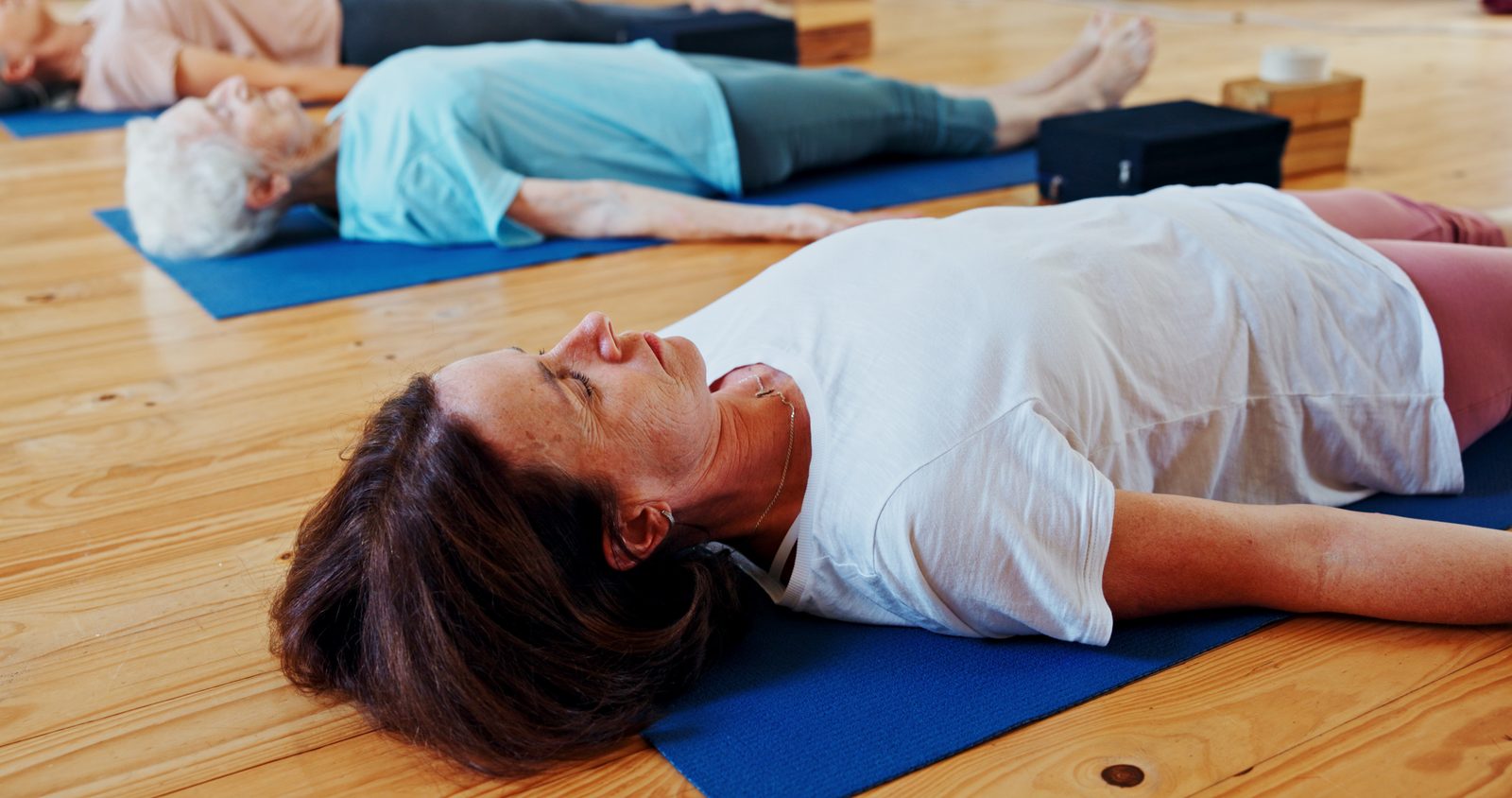
In the body and nervous system
The shoulders drop without being told to
Slow, full breathing shifts the balance from a sympathetic state — alert, braced, ready — toward parasympathetic activity, where the body rests and repairs. In practice, this is the feeling of the shoulders dropping without being told to.
Many people arrive having breathed shallowly, high in the chest, for years without noticing. Restoring range to the diaphragm and ribs over a session tends to ease tension through the neck, jaw and upper back, and often changes how breathing feels long after the session ends.
Sustained conscious breathing also changes circulation and muscle tone, which is where the familiar tingling, warmth and pleasant heaviness come from.
Sleep is one of the most frequently reported changes. When the nervous system has somewhere to discharge accumulated tension, people often find it easier to fall asleep, and easier to stay there. The relationship with physical discomfort can shift too. Pain rarely disappears, but it often loosens its grip, partly through real muscular release, partly because it's being met rather than fought.
Most often noticed: easier sleep, and a body that stops bracing all day.